

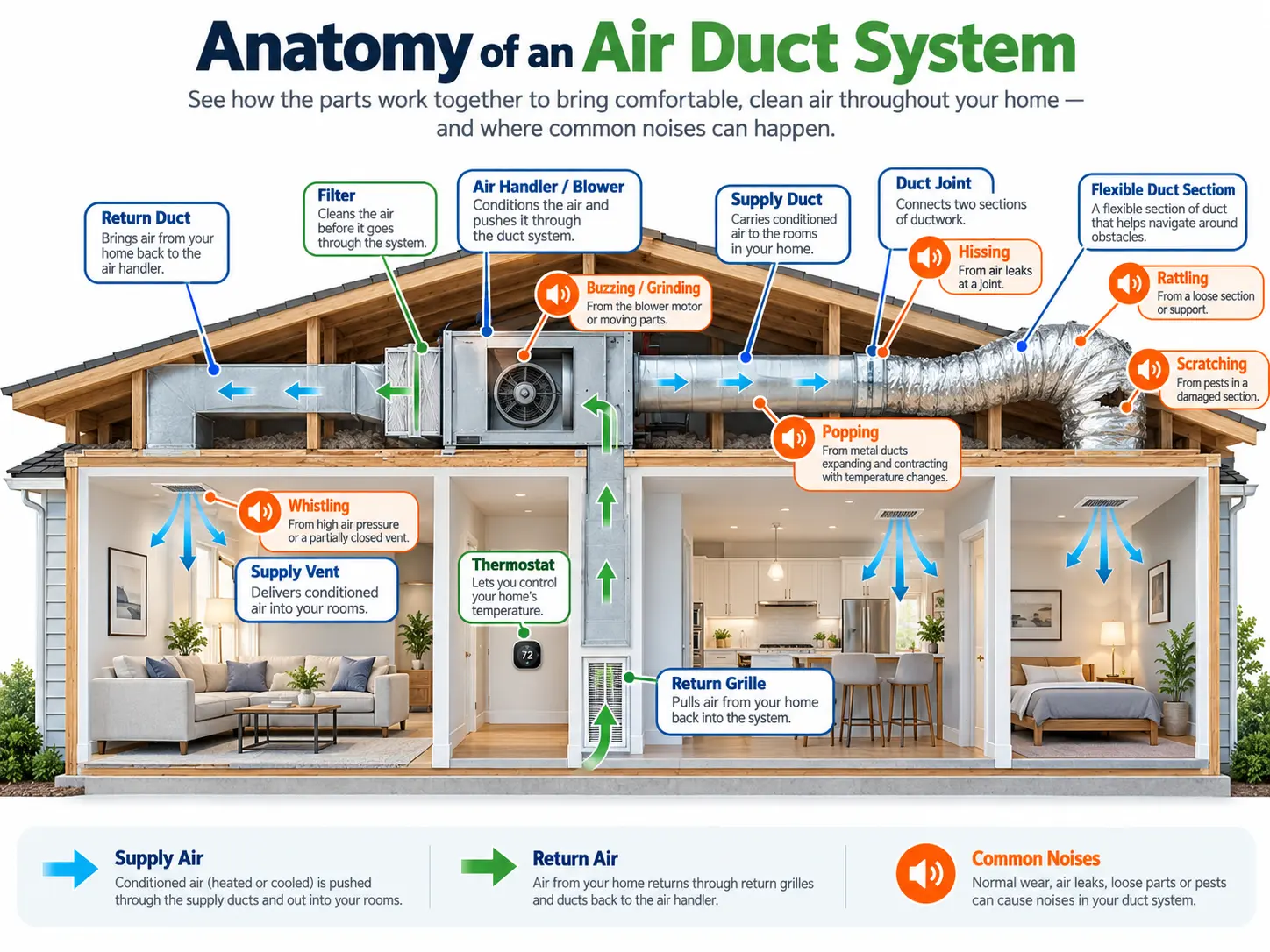
Air ducts can make popping, banging, whistling, rattling, or hissing noises when your heating or cooling system runs. Some sounds are normal, especially when the system starts or stops. Others may indicate blocked airflow, loose duct connections, air leaks, or damaged ductwork.
The type of noise, where it comes from, and when it happens can help you find the cause. At R&E Home Solutions, we inspect, clean, repair, and replace ductwork in Charleston and the surrounding Lowcountry. This guide explains what different duct noises mean, how to fix them, and when you should call a professional.
What Does Each Air Duct Noise Mean?
| Type of Noise | Possible Cause | Recommended Fix |
| Popping or banging | Temperature changes, pressure problems | Check airflow and have persistent banging inspected |
| Whistling or rushing air | Dirty filters, blocked vents, undersized ducts | Replace filters, open vents, check duct sizing |
| Rattling or vibrating | Loose screws, duct connections, or supports | Tighten accessible covers and repair loose ducts |
| Scratching or rustling | Rodents, insects, or loose debris | Remove pests, seal entry points, clean contaminated ducts |
| Hissing | Air leaks or restricted airflow | Locate and seal duct leaks |
| Buzzing, grinding, or rumbling | Blower motor, fan, or other HVAC equipment | Have an HVAC technician inspect the equipment |
6 Types of Air Duct Noises, Their Causes, and How to Fix Them
Different noises point to different problems. Before trying to fix anything, pay attention to when the sound occurs and whether it comes from one vent or several.
1. Popping or Banging Noises
What it sounds like: A sudden pop, click, or loud bang when the air conditioner or heating system turns on or off.
Why it happens: Metal air ducts expand when they warm up and contract when they cool down. As the metal moves, it can make popping or clicking sounds. Air pressure can also cause banging. When ducts are too small or airflow is restricted, pressure changes may cause flat metal sections to flex inward or outward. This movement is sometimes called oil canning.
How to fix it: Occasional popping during startup or shutdown is usually normal. If the noise is loud or happens repeatedly, start by replacing a dirty air filter and making sure supply and return vents are not blocked. If the banging continues, have a technician check the duct sizing, supports, and air pressure.
2. Whistling or Rushing Air
What it sounds like: A high-pitched whistle, whooshing, or unusually loud airflow coming from the vents.
Why it happens: Whistling usually occurs when air passes through a narrow opening or restriction. Common causes include dirty air filters, closed vents, undersized ductwork, or kinked flexible ducts. Air escaping through small gaps in duct connections can produce a similar sound.
How to fix it: Replace the air filter if it is dirty, open closed vents, and remove anything blocking the airflow. If the whistling continues, pay attention to whether it comes from one register or several rooms. Noise from a single vent may indicate a local restriction, while noise throughout the house may point to a larger airflow problem that requires professional assessment.
3. Rattling or Vibrating Noises
What it sounds like: A metallic rattle, shaking, or vibration while the HVAC system runs.
Why it happens: Rattling often comes from loose vent covers, screws, duct connections, or supports. Poorly secured duct sections can shift as air moves through them, while sagging flexible ducts may vibrate or contact nearby surfaces.
How to fix it: Check the vent covers in the affected room and tighten any loose mounting screws. If the noise comes from inside a wall, ceiling, attic, or crawlspace, the ductwork may need additional support or repairs. We provide duct repair and replacement in Charleston for damaged, loose, or improperly supported sections.
4. Scratching or Rustling Noises
What it sounds like: Scratching, scurrying, rustling, or movement inside the ductwork, sometimes even when the HVAC system is off.
Why it happens: These sounds may indicate rodents or other pests that have entered through damaged duct sections or gaps near connections. Loose debris or damaged duct materials can also create rustling sounds when air moves through the system.
How to fix it: If pests are present, contact a pest control professional to remove them and identify entry points. Once the infestation is addressed, contaminated ductwork may need cleaning or replacement. The Environmental Protection Agency (EPA) identifies pest infestations as a reason to consider professional duct cleaning.
5. Hissing Noises
What it sounds like: A steady hiss or whistle near a vent, duct joint, or connection.
Why it happens: Hissing may occur when air escapes through loose connections, poorly sealed joints, holes, or tears in flexible ducts. Restricted airflow near a vent can sometimes produce a similar sound. According to ENERGY STAR, a typical home can lose 20% to 30% of the air moving through its duct system because of leaks, holes, and poorly connected ducts.
How to fix it: A professional can locate leaks and seal damaged joints using suitable materials such as mastic or approved HVAC foil tape. Larger tears or disconnected sections may require repair or replacement. Ordinary cloth-backed duct tape should not be used for permanent duct sealing.
6. Buzzing, Grinding, or Rumbling Noises
What it sounds like: A continuous buzz, grinding sound, or deep rumble that appears to come from the air ducts.
Why it happens: These sounds often originate from the HVAC equipment rather than the ductwork. A worn blower motor, loose fan components, damaged bearings, or equipment vibration can produce noises that travel through the ducts.
How to fix it: Listen near the air handler while the system operates, without opening any equipment panels. If the noise is coming from the equipment, contact a qualified HVAC technician. Grinding or rapidly worsening mechanical noises should be inspected promptly, and equipment making severe noises should be turned off until it can be checked.
Why Ductwork Gets Noisier During Temperature Swings
Temperature changes can make existing duct noises more noticeable, especially during periods of heavy heating or cooling use.
How Temperature Changes Affect Ductwork
When warm or cool air begins moving through metal ducts, the metal changes temperature and shifts slightly. This movement is more noticeable when the temperature difference between the air inside the ducts and the surrounding space is large.
For example, during winter, warm air entering cold ductwork may cause popping sounds. In summer, the same thing can happen when cooled air moves through ducts located in a hot attic. These sounds usually happen at the beginning or end of a heating or cooling cycle.
Why Ductwork May Be Louder During Extreme Weather
During very hot or cold weather, HVAC systems often run longer to maintain indoor temperatures. Longer operating periods can make existing vibration, airflow restrictions, or loose components more noticeable.
If your ductwork only makes occasional clicking or popping sounds during seasonal changes, it may not need attention. However, a sudden increase in noise or repeated loud banging should be investigated, particularly if the system also struggles to maintain comfortable indoor temperatures.
Is Noisy Ductwork Normal or a Sign of a Problem?
Not every duct noise means something needs to be repaired. The main things to consider are how loud the sound is, how frequently it occurs, and whether your heating or cooling system is performing normally.
| Usually Normal | May Indicate a Problem |
| Occasional popping when heating starts | Repeated loud banging |
| Light ticking as ducts change temperature | Persistent rattling or vibration |
| Gentle airflow sounds | Loud whistling or hissing |
| Brief startup sounds | Grinding or unusual mechanical noises |
Noise becomes more concerning when it appears alongside other changes, such as weak airflow, uneven room temperatures, higher energy bills, or musty odors. A sound that suddenly appears after years of quiet operation is also worth checking, even if the HVAC system still seems to work normally.
How to Find Where the Air Duct Noise Is Coming From
You can often narrow down the source of a noise by listening carefully while the system operates.
Pay Attention to When the Noise Happens
Noise that begins when the air conditioner or heating system turns on may be related to a change in temperature or air pressure. Sounds that continue throughout the cycle are more likely to involve airflow or vibration. If you hear noises after the system shuts off, they may come from cooling duct materials. Scratching or movement while the HVAC system is completely off could indicate pest activity or another source unrelated to airflow.
Identify Which Vent or Room Is Noisiest
Walk through your home while the system runs and listen near different supply and return vents. If the sound is strongest at one register, the issue may be limited to that area. If several rooms have the same noise, the source may be a shared duct section or the main HVAC system.
Also pay attention to airflow. A room with unusually weak airflow and a whistling vent may have a restriction nearby.
Check Whether the Noise Comes From the Ducts or HVAC Equipment
Because ductwork carries sound throughout the house, a mechanical problem can seem like a duct problem. Compare the noise near the vents with what you hear near the air handler. If it is noticeably louder around the equipment, a qualified HVAC technician should inspect it. Do not remove equipment panels or open sealed ductwork to investigate.
How to Quiet Noisy Ductwork
Once you’ve identified the likely cause, the next step is to decide whether a simple adjustment is enough or the duct system needs professional work.
Check Filters, Vents, and Registers First
Start with parts of the system you can safely access. Check the air filter and replace it if necessary, making sure you use the correct size and type for your system. Next, check that vents are open and not blocked by furniture, rugs, or curtains. Finally, make sure vent covers sit securely against the wall, floor, or ceiling.
These checks take little time and can help rule out common problems before you arrange an inspection.
Have Damaged or Poorly Supported Ductwork Repaired
If the noise comes from a concealed or difficult-to-reach duct section, an inspection can help identify loose supports, separated joints, or damaged materials. A professional may recommend securing the existing ductwork, replacing damaged supports, or installing new sections where repairs are no longer practical.
Check Whether the Duct System Has Enough Airflow
Sometimes the problem is not a loose component but the way the duct system handles airflow. Undersized ducts, insufficient return airflow, and excessive resistance can make a system louder even when the ducts are not visibly damaged.
An HVAC technician can measure static pressure, which is the resistance air encounters as it moves through the system. Based on the results, they may recommend changes to duct sizing, return airflow, or blower settings. These adjustments should be made by a professional who can check the equipment’s airflow requirements.
Consider Insulation or Vibration Control
If the duct system is working properly but still transmits excessive sound, insulation or vibration-control measures may help. Depending on the installation, a professional may recommend suitable duct insulation, vibration-isolating supports, or a duct silencer.
Duct material can also affect how sound travels. Metal ducts tend to transmit vibration, while flexible ducts can develop noise problems if they are poorly installed or kinked. Replacing one material with another is not always necessary, and the correct solution depends on the duct system’s design.
How to Prevent Air Ducts From Making Noise
Regular maintenance can help you catch small duct problems before they become more noticeable. Check air filters throughout the year, keep vents clear, and pay attention to changes in airflow or unfamiliar sounds.
If you have accessible ductwork, look for visible damage, sagging sections, or loose connections without entering unsafe spaces. Older systems and ducts that have experienced water damage may benefit from professional inspections.
Can Dirty Air Ducts Cause Noise?
Excessive debris inside ductwork can sometimes restrict airflow or contribute to unusual sounds, but ordinary household dust usually does not cause noticeable duct noise.
Professional cleaning may be appropriate when an inspection reveals substantial debris buildup, pest contamination, or other conditions that warrant cleaning. It will not correct damaged supports, air leaks, or problems with the HVAC equipment.
If you’re considering this service, our guide explains how professional air duct cleaning works and what homeowners can expect.
Why Air Ducts Get Noisy in Charleston, SC
Charleston’s humid climate and local housing conditions can affect ductwork, particularly in homes where the ducts run through attics or crawlspaces. These areas are exposed to conditions that can gradually damage duct materials, insulation, and connections.
High Humidity and Moisture in Crawlspaces
Charleston’s humid weather can create moisture problems around ductwork installed beneath homes. When cold duct surfaces come into contact with humid air, condensation may develop, particularly if the insulation is damaged or insufficient.
Long-term moisture exposure can deteriorate insulation and contribute to damage around duct connections and supports. If you notice wet insulation, water stains, or musty odors, an inspection can help identify the source before the damage spreads.
Aging Ductwork in Older Charleston Homes
Older homes may have duct systems that have been repaired, extended, or modified over the years. Some installations may have outdated materials, aging supports, or flexible ducts that were not properly secured.
These conditions can increase the likelihood of movement and vibration when the HVAC system operates. An inspection is especially useful if the ductwork is difficult to access or its installation history is unknown.
Pest Activity in Crawlspaces
Rodents and insects can enter crawlspaces through openings around foundations, vents, or utility penetrations. If the ductwork is already damaged, these pests may also find their way into the system.
Homeowners who notice scratching sounds, droppings, or damaged duct insulation should have the area checked. Any infestation needs to be addressed before contaminated materials are cleaned or replaced.
Storms and Flooding Can Damage Ductwork
Coastal storms and flooding can expose duct systems to water, especially when they are installed beneath a home. Floodwater may damage insulation, weaken supports, or leave debris and contaminants inside the ducts.
After flooding, affected HVAC equipment and ductwork should be assessed before the system is used again. Wet or contaminated insulated ducts may need replacement rather than cleaning.
When Should You Call a Professional for Noisy Ductwork?
If the sound continues after basic checks, or you notice visible damage, reduced airflow, or signs of contamination, arrange a professional inspection.
The cost of repairing noisy ductwork depends on the cause, the extent of the damage, and how accessible the affected sections are. Minor repairs may involve securing connections or supports, while extensive damage may require replacing part of the duct system.
Not every noisy system needs new ductwork. A proper inspection helps determine which repairs are necessary and whether cleaning, sealing, or replacement would address the problem.
Get Help With Noisy Air Ducts in Charleston
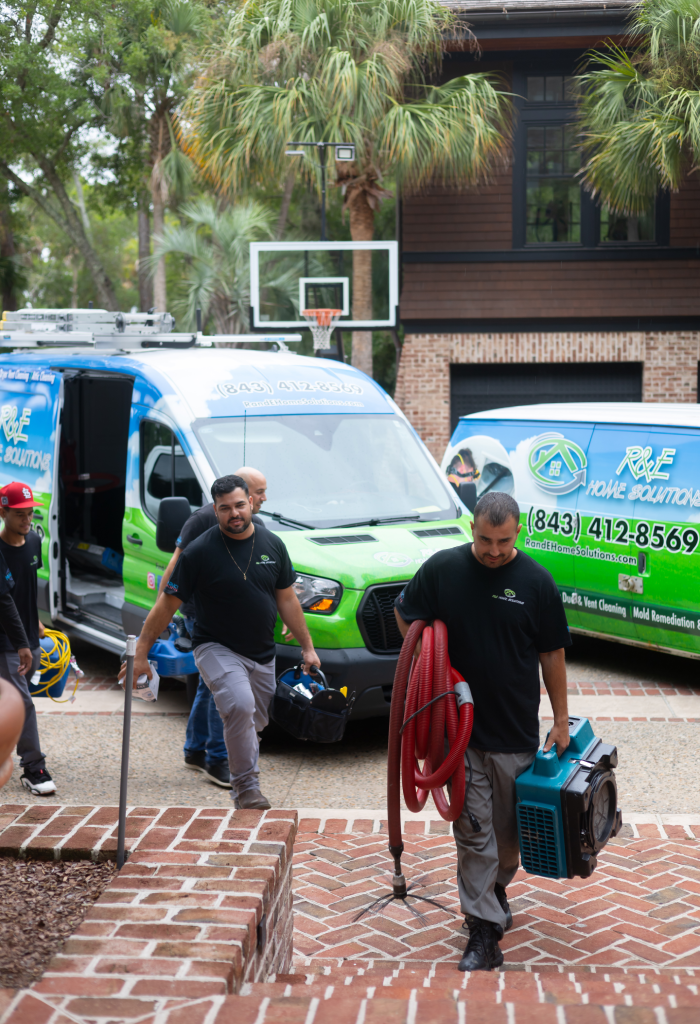
If your ductwork keeps rattling, whistling, or making other unusual noises, R&E Home Solutions can help identify issues related to damaged ducts, leaks, loose connections, or contamination.
We’re a family-owned, licensed, and insured business serving Charleston and surrounding Lowcountry communities. Our services include air duct inspections, professional cleaning, duct repairs, and replacement.
Contact R&E Home Solutions to schedule an inspection and find out what your ductwork needs.
