
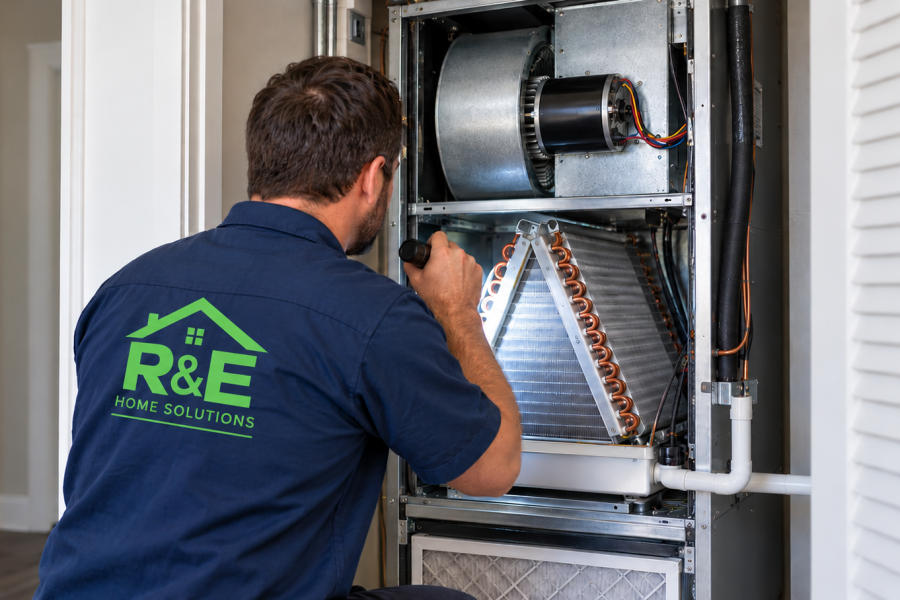
Your air handler is the indoor part of your heating and cooling system. In most homes, it sits in a closet, garage, attic, or crawlspace. It holds three parts that do most of the work:
- The blower pushes air through your ducts and out of the vents.
- The evaporator coil removes heat and moisture from the air.
- The condensate drain carries the collected water away from the unit.
When one of these parts has a problem, you usually notice it quickly. The signs include weak airflow, warm air, water near the unit, a strange noise, or a system that will not start.
This guide covers the 13 problems our technicians find most often in air handlers across the Lowcountry. Each one includes the causes and the solutions. Each heading carries one of three labels:
- Homeowner Fix: You can solve this yourself with basic care.
- Homeowner Check First: Start with the simple checks listed. Call a professional if the problem continues.
- Professional Repair: This involves electrical parts, refrigerant, or delicate components. Call a licensed HVAC technician.
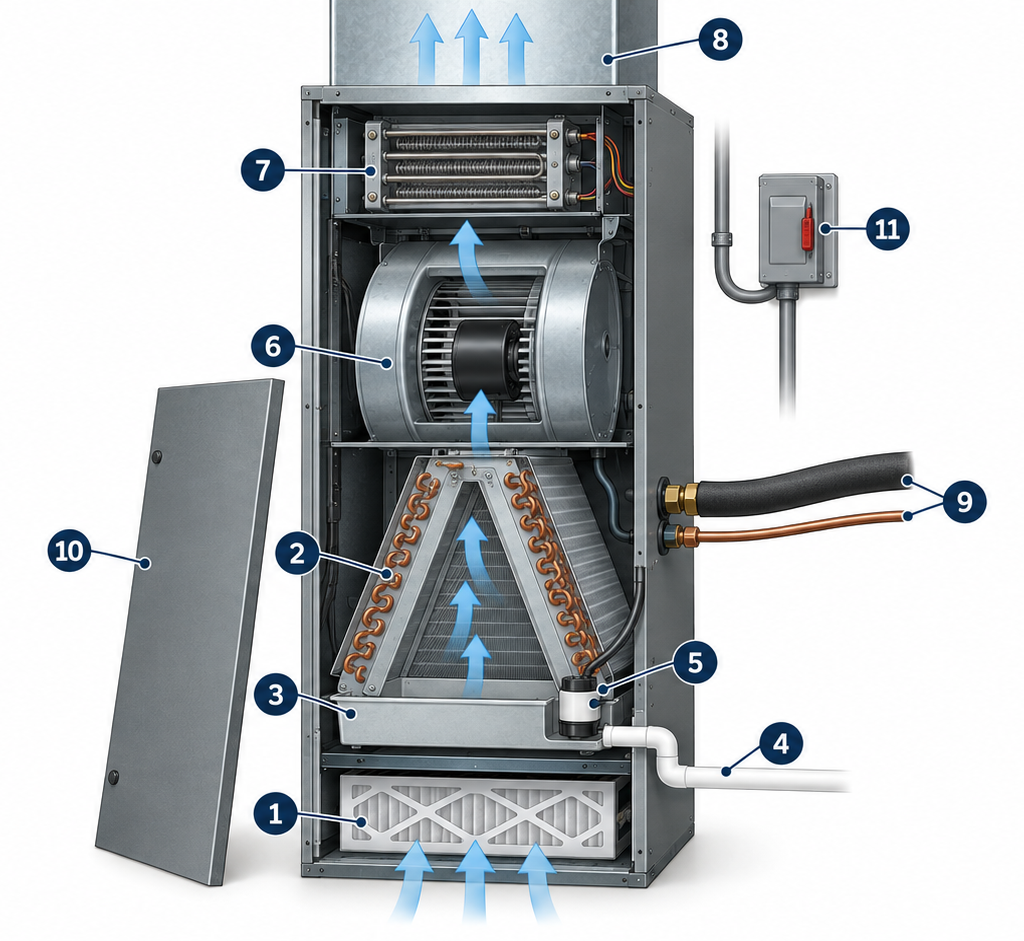
- Air filter
- Evaporator coil
- Drain pan
- Condensate drain line
- Float switch
- Blower wheel
- Blower motor
- Electric heating elements
- Refrigerant lines
- Access panel
- Service switch
Before You Check Your Air Handler
Turn the system off at the thermostat before checking anything near the unit. For any task beyond changing the filter, also switch off the power at the breaker or at the service switch next to the unit. The service switch usually looks like a regular light switch.
Leave the electrical parts, wiring, and refrigerant lines to a professional. Do not remove panels that are screwed in place.
1. Clogged Air Filter (Homeowner Fix)
A clogged filter is the most common cause of air handler problems. It is also the easiest to fix. When the filter is full, the system has to work harder to pull air through it. This raises energy bills and can lead to several other problems on this list.
Causes
- The filter has not been replaced on schedule.
- Pets, nearby construction, or a recent renovation filled the filter faster than usual.
- The filter is the wrong size, so dust slips around the edges.
What You Can Do
- Replace standard 1-inch filters every one to three months.
- Replace thicker 4- to 5-inch media filters every 6 to 12 months, or as the manufacturer recommends.
- Check the filter monthly during summer, when the system runs the most.
- Match the size printed on the old filter’s frame. Install the new filter with the arrow pointing toward the air handler.
When to Call a Professional
- If the filter gets dirty within a few weeks, ask a technician to check for leaks in the return ducts that pull in dust from the attic or crawlspace.
2. Weak Airflow From the Vents (Homeowner Check First)
Weak airflow means the system is running, but less air than usual is coming out of the vents. The house takes longer to cool, and some rooms may never reach the set temperature.
Causes
- A clogged air filter.
- Closed or blocked vents and return grilles.
- A dirty blower wheel. Dust stuck to the fins reduces how much air it can move.
- A dirty evaporator coil that blocks air from passing through.
- Disconnected, crushed, or leaking ducts. This is common in attics and crawlspaces.
What You Can Do
- Replace the filter first. This alone often restores airflow.
- Open all vents and keep furniture and rugs away from return grilles.
When to Call a Professional
- If airflow is still weak after a filter change, have a technician inspect and clean the blower wheel and coil.
- Have the ductwork inspected for gaps or damage. Our guide on the signs your ductwork is leaking explains what to look for.
3. Dirty Evaporator Coil (Call Professional)
The evaporator coil cools the air as it passes over the coil’s thin metal fins. When dust and debris coat those fins, the coil cannot absorb heat well. The system then runs longer and cools less. A dirty coil stays damp for long periods, which also makes it a common place for mold to grow.
Causes
- A clogged filter, or running the system with no filter at all.
- A poorly fitted filter that lets dust bypass it.
- Years of normal use without professional cleaning.
What You Can Do
- Keep up with filter changes to slow future buildup.
When to Call a Professional
- Have the coil cleaned by a professional. The fins bend easily, and harsh store-bought cleaners can damage them. We do not recommend cleaning the coil yourself.
- Have the coil checked during a yearly system inspection.
4. Frozen Evaporator Coil (Homeowner Check First)
When too little warm air passes over the coil, its temperature drops below freezing and ice forms. A frozen coil cannot cool your home.
You may notice frost on the copper lines near the unit or warm air from the vents. You may also see water around the air handler as the ice melts.
Causes
- Restricted airflow from a clogged filter or closed vents.
- A dirty coil or dirty blower wheel.
- Low refrigerant caused by a leak.
- A blower motor that is not running while the outdoor unit keeps cooling.
What You Can Do
- Set the thermostat to “Off” and the fan to “On.” The blower moves room air over the coil and helps the ice melt faster. This usually takes a few hours.
- Do not chip or scrape the ice. You can damage the coil.
- Place towels around the unit and watch the drain pan as the ice melts.
- Replace the filter and open any closed vents before turning the cooling back on.
When to Call a Professional
- If the coil freezes again, call a licensed HVAC technician. Repeated freezing usually means a refrigerant leak, a dirty coil, or a blower problem.
5. Clogged Condensate Drain Line and Water Leaks (Homeowner Check First)
Your air handler removes moisture from the air as it cools. That water collects in a drain pan and flows out through a drain line. When the line clogs, the water has nowhere to go. In humid climates like Charleston’s, this is one of the most frequent air handler problems we see.
Causes
- Algae, slime, and sludge growing inside the drain line.
- Dust and debris washed into the drain pan from a dirty coil.
- A frozen coil melting faster than the drain can handle.
- A cracked or rusted drain pan.
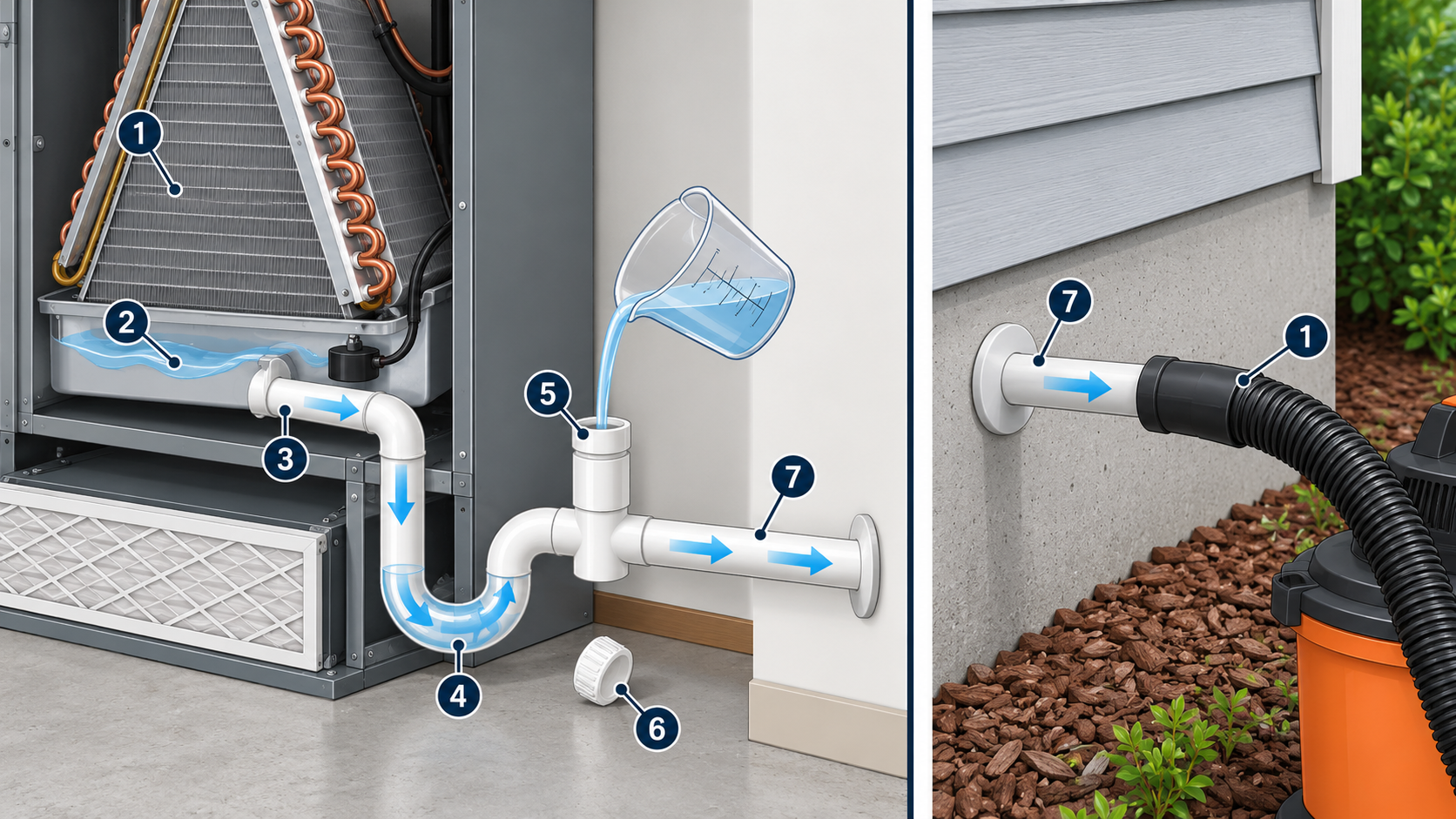
- Drain pan
- Condensate drain line
- Trap
- Access port (T-shaped fitting)
- Removable cap
- Outdoor end of the drain line
- Wet/dry vacuum hose
What You Can Do
- Turn off the power to the unit.
- Clear the line with a wet/dry vacuum at the outdoor end of the drain pipe.
- Pour one cup of distilled white vinegar into the drain line’s access port. This is usually a capped T-shaped fitting near the unit.
- Repeat the vinegar flush every few months during the cooling season to slow regrowth.
- If your unit is in the attic, check the secondary pan under it. Water in that pan means the main drain is failing.
When to Call a Professional
- If the line clogs again soon after clearing it, have a technician check the drain line’s slope and trap.
- Call for help right away if water from an attic unit reaches the ceiling below.
- Have a technician replace a cracked or rusted drain pan.
6. Refrigerant Leak (Call Professional)
Refrigerant moves heat out of your home. The system does not use it up, so if the level is low, there is a leak. Adding refrigerant without repairing the leak only delays the problem.
Signs of a leak include warm air from the vents and ice on the coil. You may also hear a hissing sound or see an oily residue near the coil or lines.
Causes
- Corrosion on the coil. This is often caused by chemicals in household air, such as cleaning products and air fresheners.
- Vibration that wears through copper lines over time.
- Loose fittings or damage during installation.
What You Can Do
- Turn the system off to protect the compressor.
When to Call a Professional
- Call a licensed HVAC technician. Under the EPA’s Section 608 rules, only certified technicians can add or remove refrigerant. Contact with refrigerant can also cause frostbite.
- The technician will find the leak, repair it or replace the coil, and recharge the system to the correct level.
7. Blower Motor Not Running (Call Professional)
The blower motor spins the fan that moves air through your home. When it stops, no air comes from the vents, even if you hear the outdoor unit running.
Causes
- A failed run capacitor. On older motors, this small part helps the motor start and keep running, and it is one of the most common failures we see.
- A worn-out motor, often signaled by humming, overheating, or a burning smell.
- A failed control board or relay that is not sending power to the motor.
- On newer variable speed motors, which have no capacitor, a failed motor module.
What You Can Do
- Turn the system off at the thermostat. Running the outdoor unit while the blower is stopped can freeze the coil.
When to Call a Professional
- Call a licensed HVAC technician to test the capacitor, motor, and controls. These parts carry high voltage even when the system is idle.
- The technician will replace the failed part. If the motor is worn, the technician will also clean the blower wheel so the new motor does not run under strain.
8. Air Handler Will Not Turn On (Homeowner Check First)
An air handler that shows no signs of life often has a simple cause. Work through these checks in order before calling for service.
Causes
- The thermostat is set to the wrong mode, or its batteries are dead.
- A tripped circuit breaker or a service switch that was turned off.
- A float switch has shut the system down. This safety device stops the system when the drain pan is full of water.
- The access panel is not fully closed, so the door safety switch keeps the unit off.
- A blown fuse or failed control board.
What You Can Do
- Check that the thermostat is on, set to “Cool” or “Heat,” and set to a temperature that should start the system. Replace its batteries if needed.
- Check the breaker panel and the service switch near the unit. Reset a tripped breaker once.
- Look for water in the drain pan. If it is full, clear the drain line as described in Problem 5.
- Press the access panel firmly into place.
- Some newer units have a small indicator light or code display. If it shows a fault code, write it down for your technician.
When to Call a Professional
- If the breaker trips a second time, leave it off and call a licensed HVAC technician. Repeated trips point to an electrical fault.
- Call a technician if none of the checks above bring the system back on.
9. Warm Air Coming From the Vents (Homeowner Check First)
When air moves from the vents but feels warm or close to room temperature, the blower is working, but the system is not cooling the air.
Causes
- The thermostat is set to “Heat,” or the fan is set to “On,” which blows uncooled air between cooling cycles.
- The outdoor unit is not running because of a tripped breaker, failed capacitor, or failed contactor.
- A dirty outdoor condenser coil that cannot release heat.
- Low refrigerant from a leak.
- A frozen evaporator coil.
What You Can Do
- Set the thermostat to “Cool” and the fan to “Auto.”
- Check that the outdoor unit is running and that its breaker is on.
- Clear leaves, grass, and debris at least two feet away from the outdoor unit.
When to Call a Professional
- If the air is still warm, call a licensed HVAC technician to check the outdoor unit and the refrigerant level.
10. Unusual Noises (Homeowner Check First)
A healthy air handler makes a steady, low sound. New or louder noises usually mean a part is loose, worn, or failing. The type of sound often points to the cause.
Causes
- Rattling: a loose panel, a loose screw, or debris on the blower wheel.
- Gurgling: a partly blocked condensate drain line.
- Banging or clanking: a loose or broken blower wheel hitting its housing.
- Squealing: worn motor bearings.
- Humming with no airflow: a failed capacitor or a motor that cannot start.
- Hissing: a possible refrigerant leak.
What You Can Do
- For rattling, check that the access panel is closed tightly.
- For gurgling, flush the drain line as described in Problem 5.
When to Call a Professional
- For banging, squealing, humming, or hissing, turn the system off and call a licensed HVAC technician. These sounds usually mean a part will fail soon.
- Call a technician if rattling continues after you secure the panel.
11. Short Cycling (Homeowner Check First)
Short cycling means the system turns on, runs only a few minutes, shuts off, and soon starts again. It wears out parts faster and leaves your home humid, because the system never runs long enough to remove moisture from the air.
Causes
- Restricted airflow from a dirty filter, coil, or blower wheel, which makes the system’s safety controls shut it down.
- A float switch that trips on and off as water levels change in the drain pan.
- A thermostat placed near a supply vent, a sunny window, or a heat source.
- Low refrigerant.
- A system that is too large for the home and cools it too quickly.
What You Can Do
- Replace the filter.
- Check the drain pan for water and clear the drain line if needed.
When to Call a Professional
- If the thermostat sits near a vent or in direct sun, ask a technician about relocating it.
- If short cycling continues, call a licensed HVAC technician to check the refrigerant, the safety controls, and the system size.
12. Burning Smell or Electrical Odor (Call Professional)
A brief dusty smell the first time you turn on the heat each year is normal. It comes from dust burning off the heating elements and should fade within an hour. A burning plastic or electrical smell that lingers is a warning sign.
Causes
- An overheating blower motor.
- Damaged or loose wiring.
- A failing capacitor or control board.
- Heavy dust buildup on the electric heating elements inside the air handler.
What You Can Do
- If the smell lingers, or you hear buzzing or see sparks, turn the system off at the breaker right away.
- Do not turn the system back on until it has been inspected.
When to Call a Professional
- Call a licensed HVAC technician for any lingering burning or electrical smell.
- To reduce the yearly dusty smell, have the air handler cleaned during routine service.
13. Mold Growth in the Air Handler (Homeowner Check First)
The coil, drain pan, and nearby ductwork stay wet for most of the cooling season. When moisture does not drain or dry properly, mold can grow inside the system. Charleston’s humid climate makes this more likely. Air handlers in attics and crawlspaces are at higher risk because they can also pull in damp air through leaks in the return ducts.
Causes
- A clogged drain line or a drain pan that holds standing water.
- A dirty coil that holds moisture and gives mold a surface to grow on.
- High indoor humidity.
- Leaks in the return ducts that pull damp attic or crawlspace air into the system.
What You Can Do
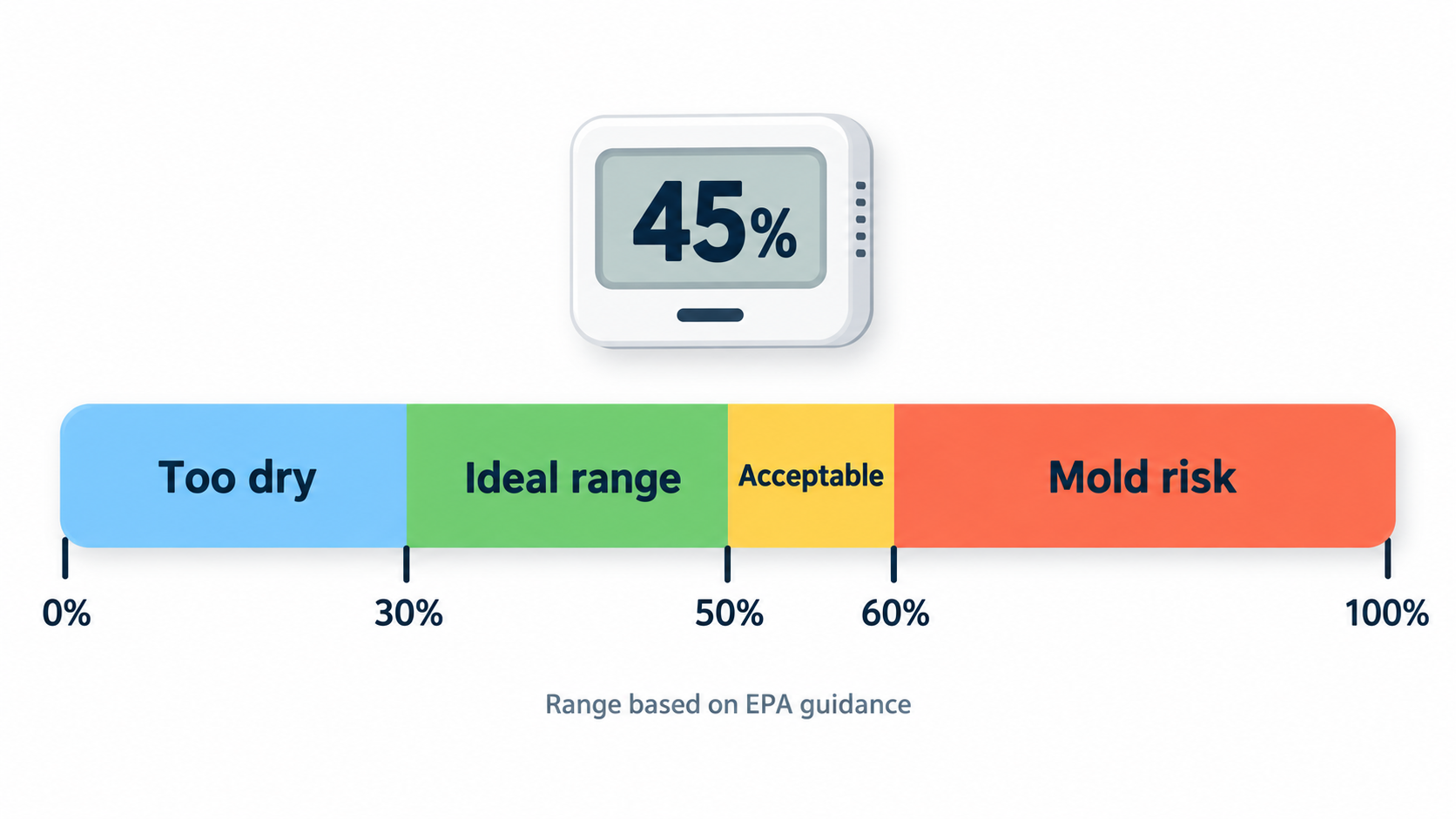
- Keep indoor humidity below 60 percent, and ideally between 30 and 50 percent, as the EPA’s guide to mold and moisture recommends. A simple humidity monitor shows your current level.
- Keep the condensate drain clear and flowing.
When to Call a Professional
- If you notice a musty smell from the vents or see growth on or around the unit, schedule a mold inspection before any cleaning. The inspection confirms what is present and where.
- Cleaning should cover the full system, including the coil, drain pan, blower, and ducts, as outlined in ACR, The NADCA Standard. Cleaning only the ducts while mold remains in the air handler lets the problem return.
How to Prevent Air Handler Problems
Most of the problems above start small and get worse over time. A simple maintenance routine catches them early and helps your air handler last longer. Many air handlers last 15 years or more with regular care.
- Monthly: Check the air filter during the cooling season, and replace it as needed.
- Every few months: Flush the condensate drain line with vinegar during the cooling season.
- Every year: Schedule a professional inspection of the air handler. The technician checks the coil, blower, drain pan, and electrical parts.
- As needed: Have the coil and blower wheel cleaned when an inspection shows buildup.
- When inspection shows a need: Have the ducts cleaned. The EPA’s guidance on air duct cleaning recommends cleaning when there is visible mold, heavy dust or debris, or signs of pests, rather than on a fixed schedule.
Air Handler and HVAC Cleaning in Charleston, SC
Many of the problems in this guide come from dirt and moisture, including weak airflow, a dirty coil, a clogged drain, and mold growth. These are the problems our team works on every day.
R&E Home Solutions is a family-owned company and a member of the National Air Duct Cleaners Association (NADCA).
We provide HVAC cleaning for the coil, blower, and drain pan, along with air duct cleaning in Charleston, SC and mold inspection. Our cleaning follows NADCA’s ACR Standard, which treats the air handler and ducts as one connected system.
For mechanical repairs, such as refrigerant leaks, failed motors, and electrical faults, we recommend a licensed HVAC technician. We will tell you plainly when a problem falls outside the work we do.
We are licensed and insured, accredited by the BBB with an A+ rating, and rated 4.9 stars across more than 800 Google reviews. Schedule an inspection to have your air handler checked.
